Agile Networks Blog
Agile Networks has been serving the Prospect Park area since 2004, providing IT Support such as technical helpdesk support, computer support, and consulting to small and medium-sized businesses.


Back in 2020, setting up remote work was an act of pure survival. Years later, many businesses still face the exact same daily technical headaches. Remote and hybrid work should not feel like an uphill battle for team members.
If a hybrid setup feels clunky, it usually boils down to three distinct technical friction points that need to be addressed directly.
0 Comments

Internal communication breakdown is one of the biggest hidden costs in a growing business. Disconnected files and fragmented email chains directly translate to duplicated efforts, missed deadlines, and lost revenue. When your team spends hours every week just trying to locate the information they need to do their jobs, your profitability takes a hit.
Let’s look at how you can stop tracking down files and actually get back to productive work.

Many business owners look at their monthly IT expenses as a necessary evil, or even a sunk cost, like an electric bill or an office lease. You pay for it because you have to, not because it promises to help you win over new clients or unlock new opportunities. This is the mindset that’s going to get you left in the dust by your competitors, and if you’re still thinking about IT this way, you need to change your mind, and fast.

If your meetings feel like a lot is being said, but your goals are never really accomplished, you are in very good company. Approximately $37 billion USD is lost each and every year to unproductive meetings alone. When you consider how much of that $37 billion is potentially due to your business’ meetings, one could hardly blame you for being sick about it.
Let’s take a look at a few ways that you can make the most of the time you spend in meetings.

Imagine one of your top employees suddenly stops caring. They aren’t leaving the company—they’re just leaving the conversation.
This is the reality of quiet quitting, and it often starts with something as small as a "ping." We’re talking about notification fatigue, the silent productivity killer. Let’s break down why your team is drowning in pings and how you can throw them a lifeline.
The Trojan Horse didn’t succeed because the Grecian armies broke down the walls of Troy; it succeeded because the Trojans fell for the Greek army’s trick and brought the secret war machine—with a small group of Greek soldiers—inside their walls. It was a tactically brilliant plan, and ended what was reportedly a decade-long siege in a matter of hours.
Whether or not the original story is based in truth, your business is potentially in danger from a similar issue: a threat coming in on what seems to be a trustworthy package. The difference is that this time, the package is a platform or tool you’ve procured from a third-party vendor.

Does your business operate in the moment, or does it prioritize what’s just around the corner? As a business owner, you have a tricky balance to strike between the two, and where technology is concerned, the answer is not always so clear-cut. But it’s generally better for your business to look at technology management with the perspective offered by an IT roadmap to inform your decision-making, from everyday implementations to major deployments.

As we stand on the threshold of a new year, it’s worth noting that the term "cybersecurity" didn't even enter the common lexicon until the late 1980s. Before that, we just called it "computer security"—mostly involving locking the server room door and hoping nobody guessed the password was "admin."
Fast forward to today, and the game has changed entirely. "Hoping for the best" is no longer a viable business plan. As you prep your resolutions, it’s time to hit the ground running with a cybersecurity posture that is as modern as the threats we face—a goal that will require training for your entire team.
If one fact has been proven true, it’s that remote and hybrid work are not temporary trends; they are future operating models that help businesses achieve greater flexibility and talent retention. Of particular interest is hybrid work, an approach that mixes the demands of in-office work with the benefits and flexibility of remote work. If you want to build hybrid work into your operational infrastructure, there can be no denying that your IT infrastructure has to be locked in—particularly if you want to stay productive, secure, and competitive.
Let’s review the benefits and risks of hybrid work as an operational model for your business.

As we try to eke out as much fun from the final months of summer as possible, many of us will find it increasingly challenging to disconnect from the office—even from miles away. We could be lounging on a quiet beach in Bora Bora, but instead of enjoying the tranquility, we’d still be itching to check our emails. Instead of being able to truly relax, many team members and business owners still feel the pressures of the office even when away, essentially undoing any benefits of the vacation.
Let’s discuss how this can be addressed for the mutual benefit of everyone, allowing you and your team members to step away from time to time without causing disruptions.

Are you blindly sprinting forward where your technology is involved, picking things that sound good, hoping you have enough forward momentum to reach the next stop? Unfortunately, this approach is often an option that many businesses take, usually to their detriment.
We want to remind you that you there is a better way: creating an IT roadmap to strategically merge your technology with your more functional business goals, helping you progress with every dollar invested.

Has this ever happened to you?
It’s late, a long day of work behind you, but you’re finally home and able to relax. Just as you get comfortable, your phone dings. You glance at your phone. It’s a work email… and if you’re like most, you’ll be itching just to check it and get it over with. The problem is, each time you do so, you whittle away the line between work and the rest of your life. This “always on” impression our technology provides has contributed to a few significant issues.
Let’s see if we can address these issues.
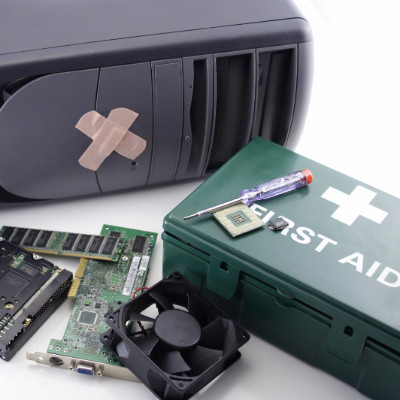
If your business technology setup is driving you nuts, you’re not alone. Many business owners and managers have endless gripes about the technology they use for their business. It could be that your Wi-Fi is crawling along and not allowing for productive Internet speeds, your software feels like it was developed for Windows Vista, or you’re constantly wondering how you are going to keep your data safe. Whatever the case, it can be fixed. In today's blog, we’ll go into how to rebuild your IT plan from scratch.

It is great to have pride and confidence in your business, especially in the team you’ve assembled… including your in-house technical support team. That said, even the most capable IT team may not fully meet a business’ needs.
Let’s explore why this is and what can be done to correct any deficits your team may encounter.

We’re sure your business has at least a couple of employees who spend part of their workday in a different location, but are you doing all you can to help them be as productive as possible? While remote work is beneficial in so many circumstances, there are a lot of caveats to it that must be considered. Today, we want to go over how you can mitigate risk and keep remote work from becoming a liability for your company.

Unfortunately, crises happen, so the only responsible course is preparing your business to deal with them. Let’s walk through what modern crisis management should look like for businesses of all sizes, identifying the steps to address these risks and protect your operations.

Happy New Year! This time is usually dedicated to making plans and commitments to improve oneself over the coming months in the interest of the future. In the spirit of the holiday, let’s talk about how the right resolutions can help your career or your business’ use of technology.

Nowadays, software is super important for running a business. It helps with everything from managing schedules and paying employees to making and selling products. Basically, businesses need software to run smoothly.
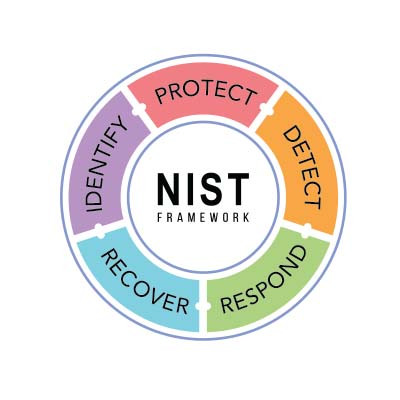
A well-structured framework is essential for establishing effective, consistent policies and strategies. This applies to many areas—including network security. Today, we’re diving into the National Institute of Standards and Technology (NIST) cybersecurity framework, which outlines steps to help safeguard your business.

Over 25 percent of data breaches target small businesses, and the impact can be huge. To protect your business, you need the right technology and smart strategies. In today’s blog, we go through some key steps to help safeguard your business from digital threats.
Customer Login
News & Updates
Agile Networks is proud to announce the launch of our new website at www.agilenetworksllc.com. The goal of the new website is to make it easier for our existing clients to submit and manage support requests, and provide more information about our services for ...
Contact Us
Learn more about what Agile Networks can do for your business.
Agile Networks
705B Moore Industrial Park
Prospect Park, Pennsylvania 19076