Agile Networks Blog
Agile Networks has been serving the Prospect Park area since 2004, providing IT Support such as technical helpdesk support, computer support, and consulting to small and medium-sized businesses.


Businesses generate massive amounts of operational data daily. When a database or financial record becomes inaccessible, operations halt immediately. The primary vulnerability for most companies is an over-reliance on legacy security tools.
0 Comments

I get it—outfitting an entire team with brand-new smartphones and tablets is a massive expense. To save a bit of cash on equipment costs, a lot of small business owners choose a simpler path. They set up a Bring Your Own Device (BYOD) policy, allowing everyone to check company emails, look up client records, and jump into the corporate chat right from their personal phones.
It is incredibly convenient, but it also creates a massive data liability.

Most successful businesses don't succeed by being the first to invent a new way of doing things. They succeed by taking systems that already work and putting them to use for their particular needs. In the world of business technology, trying to be unique is usually a fast track to wasting money and facing technical headaches.

Once upon a time, Bring Your Own Device (BYOD) was seen as mutually beneficial. An employer could save substantial costs by eliminating the need for new hardware investment, while the employee didn’t have to juggle devices and could stick with what was familiar and comfortable.
However, there is a pretty significant drawback that could upend the undeniable usefulness of BYOD if it isn’t addressed: the inherent insecurity that the business needs to contend with.
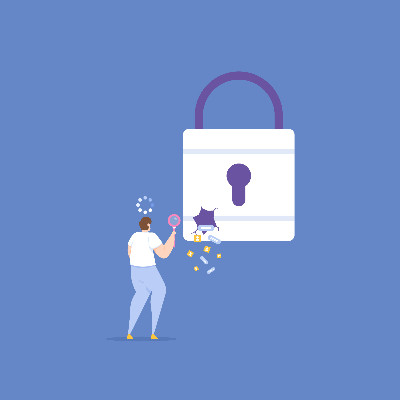
Most business owners believe that more security naturally means less speed. They accept a clunky user experience because they feel that’s the price of safety. However, this exposes a dangerous paradox: When security is too difficult to use, your team becomes less secure. If it takes ten minutes and three different devices to log in, your employee won’t work harder—they’ll work around you, taking productivity shortcuts that bypass your defenses entirely.

Unfortunately, when a single compromised workstation is all it takes to let in a ransomware attack, the old standbys of security don’t stand up the way they used to.
Small and medium-sized businesses are prime targets for cybercriminal activity. After all, many don’t have the protections one needs to catch the threats that have already infiltrated their networks… and the risks are far too high to simply hope you can react quickly enough.
Fortunately, modern SMBs aren’t helpless. They have access to endpoint detection and response.
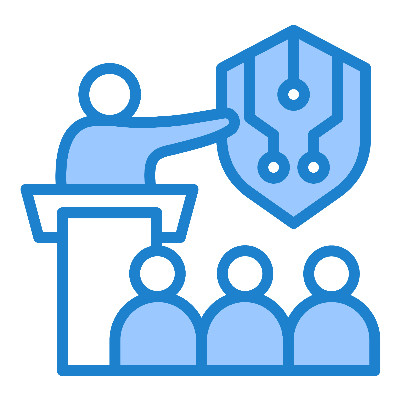
If your employees aren’t prepared to protect your business against cyberthreats, you have one of the biggest possible vulnerabilities to deal with. There are so many ways that any one of your team members could compromise your business through the simplest of mistakes. I don’t mean to scare you by sharing this; I just want to make clear how critical it is for everyone in your organization to take ownership of cybersecurity.
This will require ongoing training on an organizational level. What follows are the topics that this training absolutely must cover.

It’s easy to let your IT maintenance slide when everything seems to be running fine. However, quiet doesn't always mean healthy. To help you stay ahead of digital decay, we’ve distilled a comprehensive 15-point IT Infrastructure Audit designed to keep your operations resilient and your budget predictable.
From hunting down zombie software to retiring aging hardware, here is your roadmap to a more stable tech environment.

If your IT strategy relies on waiting for things to break before fixing them, you are likely operating on borrowed time. Network maintenance is often treated as an afterthought, leaving servers prone to hardware fatigue, backups unverified, and firewalls exposed through outdated firmware.

Most IT companies try to sell you software by scaring you half to death. I prefer a different approach: straight talk. You don't need a doom and gloom script to understand that the stakes for your business have never been higher.

Security is about more than million-dollar firewalls; often, it’s about the small, daily habits that keep small issues from escalating into major problems. Today, the lines between personal and professional lives are blurrier than ever, and a compromised personal device could also mean access to an entire corporate network.

For decades, the cybersecurity industry has operated on a comfortable, if flawed, assumption: finding a Zero-Day vulnerability (a bug unknown to the developers) was a Herculean task. It required elite human developers and ethical hackers, months of manual code review, and high-cost developer tools. This friction gave defenders a grace period—a window of time where obscurity acted as a shield.
That era officially ended on April 6, 2026.

The digital makeup of almost every business has shifted significantly over the past couple of years. Cyber insurance was once an optional add-on; in 2026, it is a requirement for corporate governance. It is no longer a simple transaction where you pay a premium and transfer your risk.
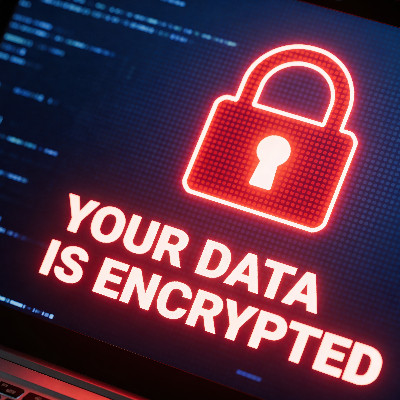
Imagine the terror of arriving at the office only to find every screen glowing with the same cryptic message: "Your files are encrypted." If you’re like most business owners, this kind of situation could set you back weeks, and that’s not to mention the financial setback and permanent data loss that could occur as a result of such a ransomware attack. What your business needs is resilience, the kind that only immutable backups can offer.

Artificial intelligence is becoming the secret sauce for competitive small businesses. Unfortunately, there is a massive catch: You can’t simply plug in AI and expect magic to happen. It takes a strategy. To help you prepare, here is a roadmap to ensure your business is AI-ready.

A ransomware attack can feel like a hostage situation. Your data is encrypted, your operations are at a standstill, and a countdown timer is ticking away alongside a demand for thousands—or even millions—of dollars in cryptocurrency.

You’ve probably heard a lot of password advice over the past decade, but how much of it is actually good advice that you should listen to? These days, with advanced automated threats able to crack incredibly complex passwords with ease, you can’t be too careful. You might even need to take a different approach entirely… which brings us to the OG password advice: just make it longer.

For years, the firewall was seen purely as a defensive tool—an all-in-one solution with antivirus, web filtering, and intrusion protection. Nowadays, they can potentially serve a much greater purpose beyond simple network security. When leveraged right, you can use the immense amount of data firewalls track to identify bottlenecks, optimize workflows, and make smarter infrastructure investments.

Does your business purchase tools in isolation, or do you make a concerted effort to purchase and implement solutions based on synergy? It might sound like a load of business mumbo-jumbo, but tools that work well together make your operations more functional and streamlined. To illustrate this, we have three seemingly disparate solutions: Voice over Internet Protocol (VoIP), Endpoint Detection and Response (EDR), and Multi-Factor Authentication (MFA). While they might seem very different at first glance, the right combination of solutions can make a significant difference for your business.

The days of good enough compliance are over. Nowadays, regulatory bodies are using the same advanced AI as the private sector to scan records and pinpoint inconsistencies in seconds. For modern businesses, relying on manual spreadsheets is no longer just inefficient, it’s a major liability.
Customer Login
News & Updates
Agile Networks is proud to announce the launch of our new website at www.agilenetworksllc.com. The goal of the new website is to make it easier for our existing clients to submit and manage support requests, and provide more information about our services for ...
Contact Us
Learn more about what Agile Networks can do for your business.
Agile Networks
705B Moore Industrial Park
Prospect Park, Pennsylvania 19076